Source Electronically Controlled Water Parking Heater for Trucks, Caravans, Motorhomes
Explore 16 listings for the Electronically Controlled Water Parking Heater, featuring options with 2-5kW power, DC12V or 24V voltage, and cooling and heating functions. Buyers can compare specifications including fuel types, weight, and temperature adjustable areas to find suitable units for various vehicles.
Key considerations
Products List

Water Heater Car Parking Heater
$100.00 - $125.00
MOQ: 10 Pieces
Dezhou Chuangtao Mechanical and Electrical Equipment Co., Ltd.

Fuel Water Heating Parking Heater 12V5kw Water Heating
$100.00 - $160.00
MOQ: 1 Pieces
Dezhou Chuangtao Mechanical and Electrical Equipment Co., Ltd.


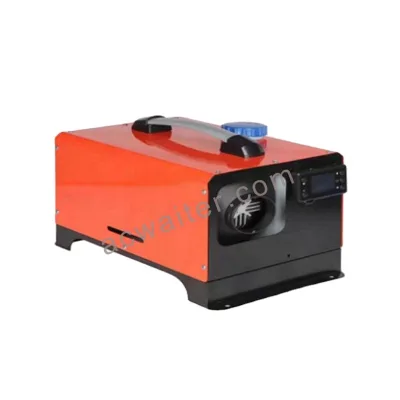
Comprehensive Sourcing Guide
Strategic Sourcing Guide for Electronically Controlled Water Parking Heaters
The global demand for reliable thermal management in off-grid and stationary vehicle applications has elevated the importance of electronically controlled water parking heaters. These systems are critical for maintaining cabin comfort, defrosting windshields, and ensuring engine operability in extreme cold conditions. For procurement professionals, navigating the market requires a disciplined approach that distinguishes between generic heating elements and sophisticated, electronically controlled units capable of precise temperature regulation. This guide synthesizes observed market data and technical attributes to provide a framework for sourcing high-quality units without relying on unverified claims or specific supplier endorsements.
Technical Architecture and Control Systems
The defining characteristic of a modern water parking heater is its control architecture. Unlike manual or mechanically operated units, electronically controlled models utilize digital sensors and automated logic to manage fuel injection, air intake, and ignition sequences. The supplied product data indicates a specific control mode described as "Electronically Controlled Pneumatic Adjusting." This suggests a hybrid approach where electronic signals drive pneumatic actuators to regulate airflow and fuel mixtures, offering a balance between precision and mechanical robustness.
When evaluating technical specifications, buyers must verify the power output and voltage compatibility. Observed listings show power ratings ranging from 2kW to 5kW, with voltage options typically available in DC12V or 24V configurations. The 2kW units are generally suited for smaller vans or trucks, while 5kW models are designed for larger motorhomes, caravans, or heavy-duty trucks. The fuel type is predominantly diesel, though some units support gasoline. It is essential to confirm the fuel consumption rates, with observed data suggesting a range of 0.11 to 0.5 liters per hour depending on the load and ambient temperature.
The heating mechanism itself relies on a water-cooled design. The radiator core type is frequently identified as "Bar and Plate," which offers high heat transfer efficiency in a compact footprint. The body material is often aluminum or metal, ensuring durability against thermal expansion and corrosion. Buyers should inspect the structure type; "Sealed Type" construction is preferred to prevent leaks and ensure safety in mobile environments. Furthermore, the working temperature range is a critical safety parameter, with observed specifications indicating an operational range of -40°C to +50°C, ensuring functionality in harsh winter climates.
Compliance and Certification Verification
In the B2B procurement of automotive heating systems, regulatory compliance is non-negotiable. The market data reveals a diverse array of certifications that buyers must verify against their target export markets. Commonly observed certifications include CE, CCC, COP, ISOCE, E-Mark, RoHS, and TSCold. The presence of these marks indicates adherence to specific regional safety and environmental standards. For instance, E-Mark certification is mandatory for vehicles sold within the European Economic Area, while CCC is required for the Chinese market.
Buyers should not assume that a single unit possesses all listed certifications. Instead, the procurement strategy must involve requesting specific test reports and certificates of conformity for each batch ordered. The customs code for these units is typically 8516800000, which is crucial for accurate tariff classification and duty calculation. Additionally, the product standard dimensions, such as 23090165mm or 23090265mm, must align with the physical constraints of the intended vehicle installation. Discrepancies in standard dimensions can lead to significant installation delays and additional fabrication costs.
Cost Drivers and Pricing Dynamics
Understanding the cost structure of electronically controlled water parking heaters is vital for budget planning. The observed price range in the market spans from 50 to 750 USD. This wide variance is driven by several factors, including power output, control complexity, material quality, and certification levels. A 2kW unit with basic electronic control will sit at the lower end of this spectrum, while a 5kW unit with advanced digital temperature sensors and multiple certifications will command a premium.
The minimum order quantity (MOQ) is another significant cost driver. Data indicates an MOQ range of 1 to 10 units. For small fleet operators or individual resellers, an MOQ of 1 allows for low-risk trial orders. However, for large-scale procurement, negotiating a lower unit price through higher volume orders is standard practice. Buyers should also consider the packaging costs; while "Neutral Packaging" is common for private label opportunities, "Carton Package" options may incur additional fees for branded or reinforced shipping.
Typical Applications and Installation Scenarios
The versatility of water parking heaters makes them suitable for a broad spectrum of applications. The observed product attributes list suitability for campers, caravans, motorhomes, trucks, and vans. The "Universal Car" specification suggests that these units are designed to be adaptable to various chassis and engine configurations, provided the mounting points and fuel lines are compatible.
The temperature adjustable area is a key feature for user comfort. Some models offer single-area control, while others provide double or four-area adjustments. This capability allows for zoned heating, where the driver's cabin can be kept warm while the sleeping area is maintained at a lower temperature, optimizing fuel efficiency. The inclusion of a digital water temperature sensor enhances this functionality by providing real-time feedback to the control unit, preventing overheating and ensuring consistent heat distribution.
Supplier Evaluation and Origin Analysis
When selecting a supplier, the geographic origin of the product is a primary indicator of manufacturing capabilities. The supplied data consistently points to Shandong, China, specifically Dezhou, as a major production hub for these units. This region has developed a specialized ecosystem for automotive heating and cooling components. Buyers should verify the specific origin details, as "Shandong, China" and "Shanddong" (a common typo in listings) refer to the same province but highlight the need for careful data validation.
Supplier evaluation should focus on their ability to provide consistent quality and technical support. Attributes such as "High Quality" are subjective and must be backed by tangible evidence, such as warranty terms, after-sales service protocols, and response times. The "Customization" attribute being available is a significant advantage for buyers with specific requirements, such as custom wiring harnesses or unique mounting brackets. However, buyers must clearly define these customization needs in the initial inquiry to avoid misunderstandings regarding lead times and additional costs.
Quality Control and Long-Term Procurement
Ensuring long-term reliability requires a robust quality control (QC) strategy. The "Sealed Type" structure and "Aluminium" body material are critical for preventing corrosion and leakage, which are common failure points in heating systems. Buyers should request pre-shipment inspection reports that verify the integrity of the radiator core and the functionality of the electronic control module. The "Digital Type" water temperature sensor should be tested for accuracy across the full operating temperature range.
For long-term procurement, establishing a relationship with a supplier that offers "Neutral Packing" or "Carton Package" options allows for flexibility in branding and logistics. The "Product Packing" details should be confirmed to ensure that the units are protected during transit, especially given the delicate nature of electronic components. Additionally, verifying the "Fuel Consumption" rates under different load conditions is essential for calculating the total cost of ownership. A unit with a consumption rate of 0.11-0.5L/H offers significant savings over time compared to less efficient models.
Comparison of Key Product Attributes
To facilitate decision-making, the following table summarizes the key attributes observed in the market for electronically controlled water parking heaters. This comparison highlights the variability in specifications that buyers must navigate.
| Attribute Category | Observed Variations | Procurement Consideration |
|---|---|---|
| Power Output | 2kW, 5kW | Match to vehicle size and heating demand. |
| Voltage | DC12V, 24V | Ensure compatibility with vehicle electrical system. |
| Control Mode | Manual, Electronically Controlled Pneumatic | Electronic control offers better precision and safety. |
| Temperature Zones | Single, Double, Four Areas | Multi-zone allows for efficient zoned heating. |
| Certifications | CE, CCC, E-Mark, RoHS, TSCold | Verify specific certs required for target market. |
| Dimensions | 23090165mm, 23090265mm, 410160420mm | Check physical fit within vehicle engine bay. |
| Material | Aluminium, Metal | Aluminum offers better heat transfer; verify corrosion resistance. |
| Fuel Type | Diesel, Gasoline | Confirm fuel availability and compatibility with local regulations. |
| Origin | Shandong, Dezhou, China | Verify specific factory location for quality assurance. |
Final Procurement Considerations
The sourcing of electronically controlled water parking heaters requires a balance between technical specifications, regulatory compliance, and cost efficiency. Buyers must rigorously verify the "Electronically Controlled Pneumatic Adjusting" mechanism to ensure it meets their operational needs. The wide range of certifications and power outputs necessitates a tailored approach to each procurement project. By focusing on verified attributes such as the "Sealed Type" structure, "Digital Type" sensors, and specific dimensional standards, buyers can mitigate risks associated with product failure and non-compliance.
Ultimately, the success of a procurement campaign depends on the ability to distinguish between marketing claims and verified product data. The observed data provides a solid foundation for making informed decisions, but continuous verification of supplier capabilities and product performance remains essential. As the market evolves, maintaining a disciplined approach to quality control and compliance will ensure the acquisition of reliable heating solutions that meet the demanding requirements of modern mobile applications.
FAQs
What control modes are available for water parking heaters?
Available control modes include manual and electronically controlled pneumatic adjusting. The electronically controlled variant offers precise temperature regulation using digital sensors, while manual modes rely on mechanical adjustments for basic operation.
Which certifications are commonly observed for these heating units?
Common certifications include CE, CCC, E-Mark, RoHS, and COP. Buyers must verify specific certificates for their target market, as E-Mark is required for Europe and CCC is mandatory for China.
How does the power output vary across different models?
Power ratings typically range from 2kW to 5kW depending on the model. Smaller vans often use 2kW units, while larger motorhomes and trucks require 5kW models for adequate heating capacity.
Can these heaters operate in extreme cold temperatures?
Yes, the working temperature range extends from -40°C to +50°C. This capability ensures reliable engine operability and cabin comfort even in harsh winter climates where standard systems might fail.
What fuel types are compatible with these water heaters?
Most units support diesel, though some models also accept gasoline. Fuel consumption rates vary between 0.11 and 0.5 liters per hour based on the load and ambient temperature conditions.
Which dimensions are standard for these heating systems?
Standard dimensions include 230*90*165mm and 230*90*265mm, with some larger models reaching 410*160*420mm. Buyers should verify physical fit within the vehicle engine bay before ordering.
What is the typical minimum order quantity for these units?
The minimum order quantity ranges from 1 to 10 units depending on the supplier. Small fleet operators can often place trial orders with an MOQ of 1, while bulk buyers negotiate lower prices.